Hunt Season Episode 2 | Post-Draw Results & Hunt Planning
Drawing a hunting tag is one of the most exciting parts of hunting season, especially when it's a tag you've been waiting years to get!
But once the excitement settles down, the real work begins.
Now you've got to figure out how you're getting there, what equipment you'll need, where you're going to hunt, what the weather might look like, and how you're going to prepare for everything in between.
And believe me, there's a lot to think about!
In Episode 2 of my Hunt Season series, I'm sharing the planning process I use after draw results come out.
For this particular season, our family had several exciting hunts lined up, including Arizona mule deer, Nevada elk, and my long-awaited Colorado fourth-season mule deer hunt. I'd been saving preference points for that Colorado hunt for years, and I finally drew the tag!
So, where do you start once you've received your hunting tag? I like breaking everything down into four main categories.
1. Transportation: How Are You Getting to Your Hunt?
The first thing I think about is transportation. And this actually involves two different questions.
How are you getting to your hunting destination?
Are you flying? Driving? Trailering equipment? Traveling through multiple states?
For our hunting season, we were planning one long trip that would take us through Arizona, Nevada, and Colorado. We wouldn't be coming home between hunts, which meant we needed to plan for roughly a month and a half on the road. That's a lot of traveling!
Choosing the Right Vehicle
Because we were going to be traveling so far, I needed to figure out which vehicle could handle the trip. At the time, I had several options, but not all of them were suitable. Ultimately, I decided to take my truck.
Once I knew which vehicle I was using, I started making a list of everything that needed attention. That included:
- Checking the tires
- Completing an oil change
- Repairing a tie rod
- Making sure the wheels were ready
- Working on additional storage
- Preparing the vehicle for towing
I also wanted to upgrade the radio because, well, if you're driving that many miles, you need some good music!
The important lesson here is to start vehicle preparations early. Don't wait until the week before your hunt to discover that your truck needs repairs.
How Will You Get Around Your Hunting Unit?
The second part of transportation is figuring out how you'll travel once you arrive. Depending on the hunting area, your options might include:
- Pickup truck or SUV
- Side-by-side
- ATV or quad
- Dirt bike
- Bicycle
- Hiking
- Boat
Not every hunting area allows every type of transportation. You'll need to research land ownership, road access, designated motorized routes, and any wilderness restrictions.
For our trip, we planned to bring my truck, dirt bike, and a side-by-side. My dad and our hunting buddy Kevin would use the side-by-side, while I could use my dirt bike to travel separately where permitted. However, I wasn't planning to carry my hunting firearm on the dirt bike because I hadn't prepared my equipment or myself for that setup.
Knowing your limitations and planning around them is part of responsible hunting.
2. Season and Weather: Prepare for More Than One Forecast
The next category I focus on is the season and expected weather. This is especially important when you're traveling to different states or hunting at different elevations.
For our trip, Arizona, Nevada, and Colorado could all have completely different weather conditions. One location might be warm and sunny, while another could have rain, freezing temperatures, or snow.
Research Historical Weather Patterns
Before a hunt, I like looking at what the weather is typically like during that time of year. Is it usually rainy? Does it snow? Are the days warm but the nights freezing?
Knowing what conditions are common helps me start planning clothing, shelter, and other equipment. Of course, historical weather patterns aren't a guarantee of what will happen during your actual hunt. That's why I also monitor forecasts as the season approaches.
Always Have a Plan B
One of the examples I shared in my video was my brother's Wyoming antelope hunt. Our family had already put together a plan, but unusual rainfall changed the situation. Roads they intended to use became difficult or impossible to access. Suddenly, the original plan wasn't going to work.
That's why I always recommend having a backup plan. Think about alternate access routes, scouting locations, and camping arrangements before you leave. If the weather changes, you don't want to be figuring everything out from scratch.
Don't Forget Elevation
Elevation plays a huge role in hunting. It can affect:
- Temperatures
- Weather conditions
- Your physical abilities
- Animal habitat and movement
- Accessibility of roads and trails
If you're traveling from lower elevations into the mountains, give yourself time to adjust and understand the potential effects of altitude. It's also important to research the elevations where your target species is likely to be found during your hunting season. Which brings us to the next step!
3. Mapping and Planning: Start Scouting Before You Arrive
Mapping is one of those things I believe hunters should be working on throughout the entire planning process. You shouldn't wait until you arrive at your hunting unit to start figuring out where you're going.
Today, we have so many tools available to help us research hunting areas from home. When I was growing up, my dad would pull out these giant paper maps. We still have boxes of them! Now, we can combine traditional maps with digital mapping tools, satellite imagery, and three-dimensional terrain views.
Don't Rely on One Map
One thing I always teach is that what you see on a map isn't necessarily what you'll experience in person. A trail might look perfectly accessible on your screen but turn out to be washed out, overgrown, or closed.
That's why I recommend using multiple resources. Compare maps, research access restrictions, and have backup locations ready. I like having a Plan A, Plan B, and even Plan C.
Understand Your Target Species
Another important part of mapping is understanding the animal you're hunting. Different species use different habitats. For example:
- Pronghorn are often associated with open grasslands and sagebrush country.
- Mountain goats frequently inhabit steep, rugged mountain terrain.
- Bighorn sheep use rocky slopes and escape terrain.
- Deer and elk move between habitats depending on season, food availability, weather, and other factors.
You also want to consider what the animals are focused on during your particular season. Are they in the rut? Are they searching for food or water? Are they moving toward winter ranges? Are they seeking areas with less disturbance? These factors can help you narrow down where to focus your scouting.
Contact Local Wildlife Professionals Early
Something else I recommend is reaching out to people who know the area. That might include:
- Wildlife biologists
- Local wildlife agency staff
- Guides
- Taxidermists
- Other knowledgeable hunters
But here's my advice: Don't wait until the last minute!
If you're leaving for your hunt next week, that's not the ideal time to start calling everyone and asking where the animals are. Start your research early.
When you contact someone, show that you've already put in some effort. Instead of asking, "Where should I hunt?" try asking a specific question based on your research.
For example: "I've been researching this area and noticed reports of elk using these elevations during late season. Is that still consistent with what you're seeing?"
You may not always receive detailed information, but doing your homework first helps you ask better questions. And remember to respect people's time.
4. Gear: Start Preparing Long Before Hunting Season
This is usually the category where I spend a lot of time! Our family has accumulated quite a bit of hunting equipment over the years. Between my dad, Kevin, and myself, we have gear for all kinds of different hunting situations.
But that doesn't mean we have everything ready for every hunt. Especially when we're traveling to new locations or staying out longer than usual. I like breaking gear preparation into several smaller categories.
Sleeping and Shelter Equipment
Think about where you're going to sleep. Will you be staying in a tent, camper, hotel, or backpacking into the wilderness? Your sleeping setup might include:
- Tent or other shelter
- Sleeping bag
- Sleeping pad or cot
- Appropriate insulation
- Additional weather protection
Make sure your equipment is suitable for the conditions you might encounter.
Clothing
Clothing is another category that deserves its own checklist. Think about what you'll need for:
- Traveling
- Sleeping
- Staying around camp
- Hiking
- Sitting and glassing
- Rain or snow
- Cold mornings and warmer afternoons
I always recommend thinking in layers. That gives you more flexibility as temperatures and activity levels change.
Optics
Before heading out, inspect your optics. This might include:
- Binoculars
- Rangefinder
- Spotting scope
- Tripod
Make sure everything is working properly. If you dropped your spotting scope months ago and forgot about it, you don't want to discover that it's damaged the night before your hunt!
Hunting Equipment
Your hunting equipment will depend on the species, season, and legal method of take. Whether you're using archery equipment, a rifle, or a shotgun, inspect your gear well before the season. Follow manufacturer recommendations and make sure everything is functioning safely. Also verify that your ammunition or other hunting equipment meets the regulations for your destination.
Safety and Emergency Gear
Your safety equipment should go beyond a tiny first aid kit. Think about the conditions and situations you might face. Are you hunting in extreme heat? Cold weather? Remote mountains? What would you need if you became stranded or couldn't return to camp? Your safety kit should reflect the actual risks of your trip.
Camp Kitchen and Water
Food and water are another major part of hunt planning. Are you bringing home-cooked meals? Freeze-dried food? Buying groceries along the way? What about drinking water? Will you bring enough with you, refill containers at camp, or need to treat water from natural sources?
If you're relying on streams, lakes, or snow, you'll need an appropriate water treatment plan. Don't assume water is safe to drink simply because it looks clean.
Harvest Kit
Don't forget to prepare for a successful hunt! Your harvest kit might include:
- Appropriate knives and processing tools
- Game bags
- Gloves
- Required tags and documentation
- Equipment for cooling and transporting meat
Think about how you'll care for the animal before you're standing in the field trying to figure everything out.
Hunting Backpack
Finally, review your hunting backpack. Are you doing day hunts from base camp? Will you be backpacking into the wilderness? How much equipment do you need to carry? Your backpack setup should match the type of hunt you're planning. You don't necessarily need the largest pack available. You need one that comfortably carries the equipment your hunt requires.
5. Don't Forget Your Hunting Tags!
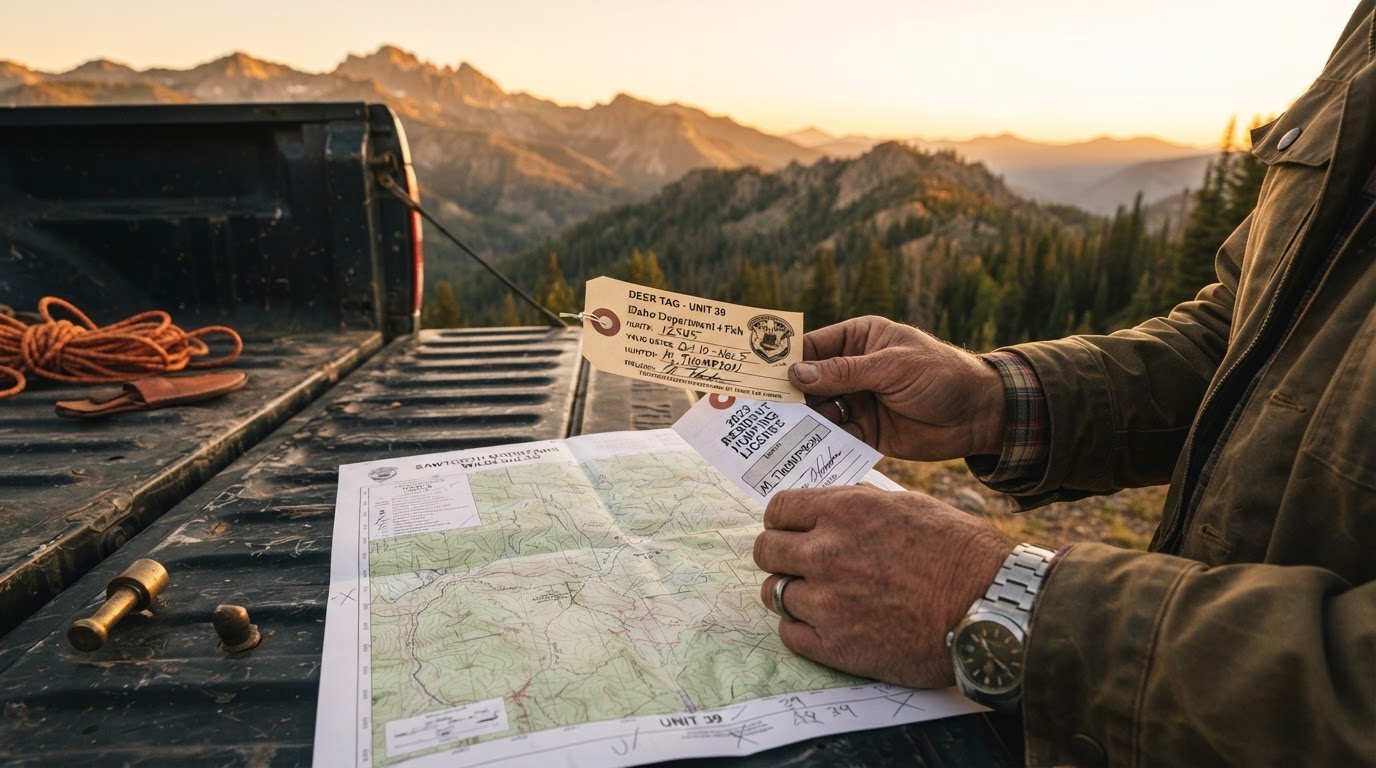
One of the smaller details I mentioned in the video is how I organize my hunting tags.
When I'm actively hunting a particular zone, I keep the appropriate license and tag in my binocular harness. That way, they're easy to access when needed.
For tags I'm not currently using, I keep them in a designated spot at home. At the time of filming, that was a visible location on my wall where I could easily see them. I didn't want to be scrambling around the house trying to remember where I put my Colorado mule deer tag!
Whatever organization system you use, make sure your tags and licenses are secure and accessible when required. And always verify the current documentation requirements for the state where you're hunting.
Post-Draw Hunting Preparation Checklist
Here's a quick checklist you can use after receiving your hunting draw results.
Transportation
- Decide whether you're driving or flying
- Choose the vehicle you'll be using
- Schedule necessary vehicle maintenance
- Research roads and access restrictions
- Determine whether additional transportation is needed
Season and Weather
- Confirm season dates
- Research historical weather
- Monitor upcoming forecasts
- Consider elevation
- Prepare alternate plans for changing conditions
Mapping and Scouting
- Review hunting unit boundaries
- Research public and private land
- Check access restrictions
- Study terrain and elevation
- Research seasonal animal behavior
- Identify multiple scouting locations
- Contact local wildlife professionals early
Gear and Equipment
- Inspect sleeping equipment
- Prepare appropriate clothing
- Check optics
- Inspect hunting equipment
- Organize safety supplies
- Plan meals and water
- Prepare harvest equipment
- Organize your hunting backpack
- Confirm licenses and tags
Watch Hunt Season Episode 2: Post Draw Results
Want to hear more about my planning process and the hunts we were getting ready for? In Episode 2 of my Hunt Season series, I walk through each of these categories and share how I was preparing for our Arizona, Nevada, and Colorado hunting adventures.
Watch the full episode on the Wicked Addiction Wilderness YouTube channel.
Final Thoughts: Your Hunt Starts Long Before Opening Day
One of the biggest things I want new hunters to understand is that hunting season doesn't begin when you step into the field. It begins when you start preparing.
From researching your hunting area to checking your equipment and planning for unexpected weather, every little step helps you become a more prepared hunter. And if you're new to hunting, don't feel like you need to know everything immediately. That's exactly why I created Wicked Addiction Wilderness.
Continue Your Hunting Education
Through the Wicked Addiction Wilderness Hunting Academy, I help new and developing hunters understand everything from animal behavior and scouting to gear selection and hunt planning. If you're ready to build your knowledge and confidence before your next hunting adventure, explore the Hunting Academy.
Happy hunting!
Karen Vallauri
Wicked Addiction Wilderness
From the classroom to the wild.