Hunting Tips for Beginners | Women in Hunting | Hunt Planning
You drew your hunting tag! Now what?
If you've never hunted out of state before, figuring out everything you need to do before your trip can feel a little overwhelming.
Where are you going to stay? What's the weather going to be like? What gear do you need? How much food should you bring? And that's just the beginning!
I've been fortunate enough to go on several out-of-state hunting trips with my dad and family. While most of my hunting growing up was local here in Northern California, some of my favorite hunting memories have come from traveling to other states.
One of those memories was drawing a once-in-a-lifetime Idaho moose tag. It was just my dad and me on that hunt, and it's still an experience I wish I could go back and relive.
In one of my very first YouTube videos, back when I was running Valorie Huntress, I shared the first things I start thinking about when someone in our family draws an out-of-state tag.
And even though that video was filmed years ago, a lot of those same planning steps still apply today.
So whether you're planning your first mule deer hunt, elk hunt, or another big game adventure, here's where I recommend starting.
1. Research the Weather and Elevation
The first thing I start looking at after finding out where we're hunting is the weather. And I don't just mean checking the forecast a few days before leaving.
I want to understand what the conditions are typically like during that particular hunting season. For example, if you're hunting in November, you might be dealing with snow, freezing temperatures, or changing mountain weather. But it all depends on the location and elevation.
Things to Research
- Average daytime and nighttime temperatures
- Historical snowfall and precipitation
- Elevation of your hunting area
- Potential road closures
- Terrain and accessibility
- How quickly weather conditions can change
When we were preparing for my Idaho moose hunt, I knew we'd be hunting in early November. I expected cold weather, but I also knew I probably wouldn't need the same equipment I would bring for a much colder winter expedition. That helped me decide what clothing and camping equipment to pack.
My tip: Don't just research the nearest town. Look at the actual elevation and conditions where you'll be hunting.
2. Contact Local Wildlife Officials
This is something I talked about in my original video that I still think is worth doing. Once you know your hunting unit, start researching the animals and hunting conditions in that area.
Local wildlife officials may be able to help you find information about:
- Historical harvest success
- Animal populations
- Typical hunting conditions
- Access restrictions
- Hunting regulations
- Local wildlife management information
You can also research official harvest statistics published by the state's wildlife agency.
Understand the Animals You're Hunting
Here's something I learned during my earlier mule deer hunting experiences. Growing up in Northern California, I was used to seeing certain deer sizes and characteristics.
When I started hunting in other areas, I realized that what I considered a large buck at home wasn't necessarily the same as what I might encounter somewhere else. Different regions can have different habitat conditions and animal populations.
It's worth understanding what you're looking at before you get into the field. And remember, antler size isn't everything. Your priorities might be meat, experience, or simply having the opportunity to hunt a new area.
3. Start Your Hunting Gear List Early
Once I understand the weather, elevation, and type of hunt, I start working on my gear list. I'm a big list person! And I would much rather have a checklist than realize halfway through a road trip that I forgot something important.
Clothing
Start with clothing appropriate for the conditions. For example:
- Base layers
- Insulating layers
- Weather-resistant outerwear
- Hunting pants
- Comfortable boots
- Socks
- Gloves
- Hats
- Extra clothing for camp
One thing I mentioned in my original video was how much hunting clothing had changed for women. Growing up, I wore a lot of men's and boys' hunting clothes because there weren't nearly as many options designed for women. I also had plenty of hand-me-downs from my dad!
As I got older, I started replacing some of those items with clothing that actually fit me. And let me tell you, having clothing that fits properly can make a big difference when you're hiking, climbing, or spending long days outside.
You don't need to replace your entire hunting wardrobe at once. Start with the items that matter most for comfort, safety, and the conditions you'll encounter.
4. Decide What Kind of Camp You'll Have
Your camping setup makes a big difference in how you pack. Are you staying in a hotel? Camping near your vehicle? Setting up a base camp? Or backpacking into the wilderness? Each option requires a different approach.
Base Camp Hunting
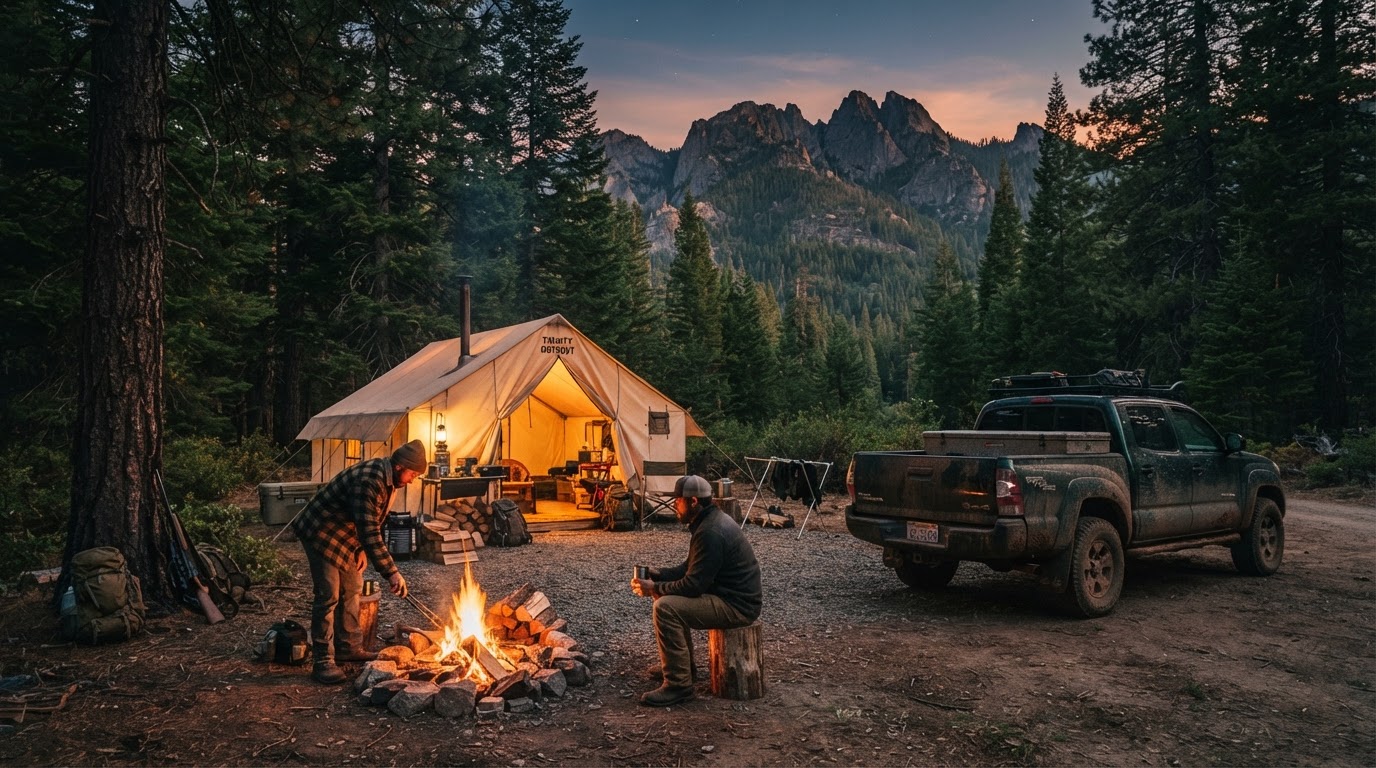
For my Idaho moose hunt, it was just my dad and me. We brought one of our canvas tents, which worked well for the two of us. We didn't need a huge camp, but we wanted enough room to be comfortable and store our equipment.
With a vehicle-accessible base camp, you may have more flexibility to bring:
- A larger tent
- Sleeping equipment
- Cooking supplies
- Extra food
- Additional clothing
- Camp chairs and other comforts
Backpack Hunting
Backpack hunting is a completely different experience. You're carrying your equipment with you, so weight becomes a much bigger concern.
In my original video, I talked about wanting to get more involved in backpack hunting. I loved the idea of following an elk herd, setting up camp, and continuing the hunt the next day. But I also knew it would take preparation.
And that's something I want beginners to understand. You don't have to start with the most difficult style of hunting. Choose a method that works for your experience, physical abilities, equipment, and hunting goals.
5. Plan Your Food Before the Hunt
Food is one of those things that can get overlooked when you're excited about a hunt. But you're going to need to eat! And depending on where you're hunting, you might not have easy access to stores or restaurants.
In my original video, I showed some of the freeze-dried meals I was stocking up on. At the time, the pandemic was making certain camping supplies harder to find and more expensive. I wanted to make sure we had everything we needed well before leaving.
Base Camp Food
If you're staying near your vehicle, you may have room for coolers, cooking equipment, and larger meals. That gives you more options for meal planning.
Backpack Hunting Food
If you're backpacking, things are different. You need to consider:
- Food weight
- Calories and nutrition
- Preparation requirements
- Water availability
- Cooking equipment
- Food storage requirements
Freeze-dried meals can be convenient, but they're not your only option. I also talked about experimenting with homemade meals that I could prepare and pack for hunting trips.
One thing I always recommend is testing your meals before the hunt. You don't want to discover five miles into the backcountry that you hate everything you packed!
6. Make a List of Gear You Still Need
Once you've organized the gear you already own, figure out what's missing. When I first started planning more of my own hunts, I had a lot of equipment that had been passed down from my dad. That was a huge help!
But eventually, I wanted to start investing in my own gear. Not because I needed everything to be brand new, but because I wanted equipment that worked for me. In the video, one of the items I was hoping to upgrade was my spotting scope.
My Advice for New Hunters
- Don't feel pressured to buy everything at once.
- Start with what you already have.
- Borrow equipment when appropriate.
- Figure out what works for you.
- Then invest in the items that will make the biggest difference.
Good boots, properly fitting clothing, reliable navigation equipment, and essential safety supplies are often more important than having every new hunting gadget.
7. Know Who Is Going on the Hunt
This is another important part of planning. Who is actually coming with you?
On my Idaho moose hunt, several of our usual hunting partners couldn't make the trip. My husband also couldn't get the time off work. So it ended up being just my dad and me. And I loved that experience.
For the upcoming hunt I was discussing in the video, we were planning on a larger group, including my dad, husband, and another hunting partner. The number of people attending affects almost everything.
Think about:
- Transportation
- Sleeping arrangements
- Food quantities
- Camp equipment
- Shared responsibilities
- Communication
- Packing out an animal
Make sure everyone knows what they're responsible for before leaving. You don't want to arrive at camp and discover that everybody thought somebody else was bringing the stove!
8. Start Looking at Maps and Terrain
In my original video, I briefly mentioned mapping as another important part of preparing for an out-of-state hunt. And this is something I've continued learning and teaching over the years.
Before heading into a new hunting area, familiarize yourself with the terrain. Look at access roads, elevation changes, potential camping locations, and areas you want to scout. Also make sure you understand property boundaries and where hunting access is legally permitted.
You don't want your first time looking at the hunting unit to be the morning your season opens.
9. Prepare Yourself Physically
Another thing I mentioned was getting into better physical shape before the hunt. This doesn't mean you have to be some extreme athlete to become a hunter. But you should understand what your hunt will require.
A hunt near a vehicle-accessible base camp might have very different physical demands from a backpack hunt at high elevation. Think about the terrain you'll be covering and the equipment you'll be carrying.
Start preparing early enough that you can gradually build your endurance and confidence. And don't forget that packing out an animal can be much more physically demanding than the hike in!
10. Why I Wanted to Help More Women Get Into Hunting
This was actually one of the biggest reasons I started making hunting videos. Growing up, I was lucky to have my dad teaching me how to hunt. But I didn't have many other women around me who shared that interest.
I even remember being made fun of in school because I was a girl who loved big game hunting. It wasn't always easy.
And as I got older, I started meeting more women who wanted to learn. Some wanted to hunt to provide meat for their families. Others wanted to participate in hunts with their husbands or partners. And some simply wanted to learn something new for themselves.
I wanted to be someone they could learn from. Someone who understood what it was like to be a woman in the hunting world. Someone who could take the things she'd learned from her dad, combine them with her own experiences, and help make hunting more approachable for other women.
That's a big part of what eventually grew into Wicked Addiction Wilderness. And it's still one of the reasons I love teaching today.
Out-of-State Hunting Preparation Checklist
Here's a simple checklist to help you start planning your next hunting adventure.
Research and Planning
- Confirm your hunting tag, unit, and season dates.
- Review current state hunting regulations.
- Research the weather and elevation.
- Look up historical harvest information.
- Research public land and access.
- Download maps and plan your route.
- Check applicable travel and transportation requirements.
Gear and Clothing
- Make a clothing list.
- Check your boots and outerwear.
- Organize your hunting equipment.
- Inspect binoculars and spotting scopes.
- Prepare navigation and communication equipment.
- Pack first aid and emergency supplies.
- Identify any equipment you still need.
Camp and Food
- Decide between base camp, backpacking, or lodging.
- Confirm sleeping arrangements.
- Plan meals and snacks.
- Calculate food and water needs.
- Check cooking equipment.
- Organize food storage.
- Plan for changing weather conditions.
Hunting Group and Preparation
- Confirm who's attending.
- Divide shared equipment responsibilities.
- Plan transportation.
- Discuss communication and emergency plans.
- Prepare physically for the terrain.
- Make a plan for recovering and transporting harvested game.
Watch My Original Out-of-State Hunting Video
This video is a special one because it was one of my first YouTube videos as Valorie Huntress. I talk about my Idaho moose hunt, preparing for another family hunting trip, the gear I was organizing, and why I wanted to help more women learn to hunt. It's fun looking back at where everything started!
Watch the original video here.
Final Thoughts: You Don't Have to Figure Everything Out at Once
Planning your first out-of-state hunt can seem like a lot. And truthfully, there are a lot of moving pieces. But you don't have to figure everything out in one day.
Start with the basics. Understand where you're going, what you're hunting, what the conditions will be like, and what equipment you'll need. Then build your plan from there.
And remember, every hunt is a learning experience. Even after hunting my entire life, I'm still learning new things every season.
Continue Learning With Wicked Addiction Wilderness
If you're new to hunting or want help planning your next big game adventure, check out the Wicked Addiction Wilderness Hunting Academy. Explore the courses, build your skills, and get ready for your next hunt.
Explore the Wicked Addiction Wilderness Hunting Academy.
Happy hunting!
Karen Vallauri
Wicked Addiction Wilderness
From the classroom to the wild.