
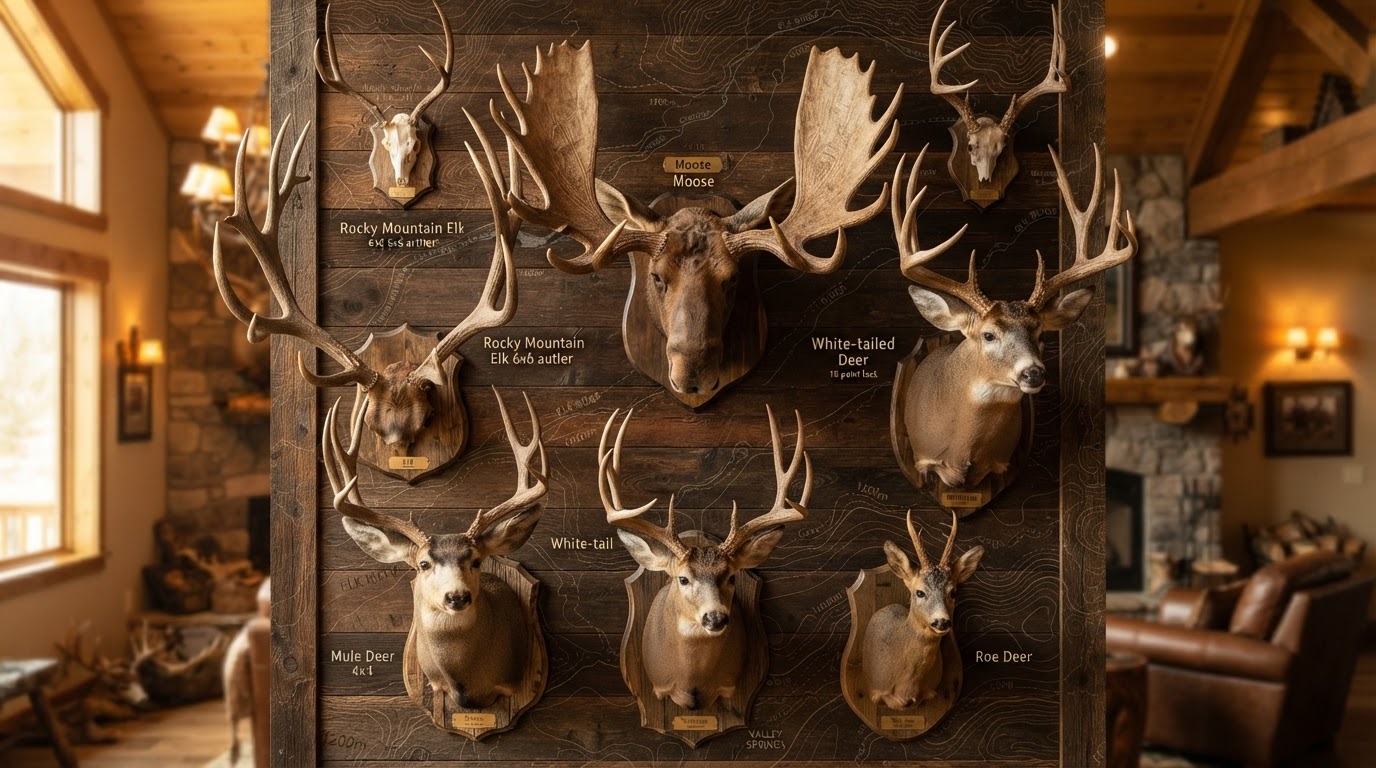
Learn the basic parts of antlers, common hunting terminology, and the differences between deer, elk, moose, and caribou.
Have you ever been around a group of hunters and heard someone say something like: “That’s a nice typical buck!” “Look at the eye guards on that one!” “Did you see that big forky?”
And you’re standing there wondering what in the world they’re talking about?
Don’t worry! Hunting has its own language, and sometimes it feels like you need a dictionary just to keep up.
That’s why I started my Hunting Terms for Beginners series. Today, we’re talking all about antlers.
We’re going to cover what antlers are, how they grow, the different parts of an antler, and some of the common terms you’ll hear hunters use. We’ll also look at how antler structures differ between deer, elk, and moose.
So, let’s get into it!
1. What’s the Difference Between Antlers and Horns?
Before we get into antler terminology, let’s clear up something that confuses a lot of beginners. Antlers and horns are not the same thing!
Antlers
Antlers are made of bone. They’re found on animals in the deer family, including:
- Deer
- Elk
- Moose
- Caribou
One of the most interesting things about antlers is that they’re typically grown and shed every year. After an animal sheds its antlers, a new set begins growing during the next antler-growth cycle.
Horns
Horns are different. Most true horns have a bony core covered by a sheath made of keratin, the same protein found in our hair and fingernails. Unlike antlers, most horns are permanent and continue growing throughout an animal’s life.
One interesting exception is the pronghorn, which sheds its outer horn sheath. But we’ll save all the horn terminology for another lesson! Today, we’re focusing on antlers.
2. Which North American Animals Have Antlers?
In North America, the four main groups I focus on when teaching antler terminology are:
Deer: Including mule deer, whitetail deer, blacktail deer, and their different regional varieties.
Elk: Known for their large antlers with multiple points extending from the main beam.
Moose: Famous for their broad, flattened antlers.
Caribou: Known for their distinctive, often complex antler structures.
Each species has its own typical antler shape. Once you start recognizing those differences, identifying antlers becomes much easier.
3. What Is a Main Beam?
The main beam is the primary structure of an antler. Think of it as the foundation that the other points grow from.
On a typical whitetail deer, the main beam curves outward and forward, with individual points growing upward from it. On mule deer and blacktail deer, the main beam commonly branches into forks.
The main beam is also an important part of measuring antlers for scoring.
4. What Is a Tine?
A tine is a point that branches off an antler. Depending on the species and the scoring system being used, individual tines may have specific names or designations.
For example, you might hear someone refer to a G2, G3, or G4. Those labels help identify particular points on the antler.
You don’t necessarily need to memorize every tine designation to start hunting, but understanding what a tine is will help you follow conversations about antlers.
5. Typical vs. Non-Typical Antlers
These are two terms you’ll hear quite frequently.
Typical Antlers
When someone describes an animal as having a typical rack, they’re referring to an antler structure that generally follows the normal pattern for that species. For example, a typical mule deer rack commonly has a branching, forked appearance. A typical whitetail rack usually has individual tines growing from the main beam.
Non-Typical Antlers
A non-typical rack has additional or unusual antler growth that differs from the standard pattern. This might include:
- Extra points
- Unusual branching
- Irregular antler growth
- Abnormal projections
Personally, I love seeing unusual antlers! There’s something fascinating about looking at a rack and wondering how it ended up growing that way.
In formal scoring systems, typical and non-typical classifications have specific measurement rules. So an unusual-looking antler isn’t automatically classified as non-typical just because it looks different.
6. What Does “Garbage” Mean on Antlers?
This is one of those hunting terms that can sound a little strange if you’ve never heard it before.
When hunters talk about a buck having garbage, they’re usually referring to extra or abnormal antler growth. The main structure might look fairly normal, but there could be additional points, bumps, or unusual formations.
For example, a deer might have a fairly typical rack with one extra point growing in an unexpected location. Depending on the scoring system, those abnormal points can affect how the rack is measured.
And personally? I think those unusual features are pretty cool! They make every set of antlers a little different.
7. What Is Velvet on Antlers?
If you’ve ever seen a deer or elk during the summer with fuzzy-looking antlers, you’ve seen velvet.
Velvet is the soft, living tissue that covers growing antlers.
During the growth process, velvet contains blood vessels that supply nutrients to the developing bone. That’s part of what makes antler growth so fascinating. Antlers can grow incredibly quickly during the growing season.
What Happens When the Velvet Comes Off?
Once antler growth is complete, the velvet dries and the animal begins shedding it. This process is commonly called rubbing.
Deer and elk often rub their antlers against trees, brush, and other vegetation to help remove the velvet. Once the velvet is gone, the hard antler underneath is exposed.
You may also notice that some antlers are darker than others. Part of that coloration can come from contact with vegetation, sap, and other materials during rubbing.
8. What Is a Rub?
A rub is an area where an animal has rubbed its antlers against a tree, shrub, or other vegetation.
Hunters often look for rubs while scouting. They can be a useful sign that antlered animals have been using an area.
However, not every rub means a large buck or bull is currently nearby. Rubs can vary in age, and animals may travel through an area without staying there. That’s why I always recommend looking at multiple signs rather than relying on just one.
9. What Is a Cactus Buck?
A cactus buck is a term hunters use for a deer with unusual, often knobby or irregular antler growth. Instead of a clean, normal-looking rack, the antlers may have extra bumps, projections, or masses of abnormal growth.
Sometimes these features appear near the base of the antlers. Other times, the irregular growth can be more extensive.
There are several possible reasons for abnormal antler development, including injury, hormonal changes, or problems during the growth process. It’s one of those interesting things you might come across while learning about wildlife.
10. What Is a Forky?
If you’re hunting mule deer or blacktail deer, you’ll probably hear the term forky.
A forky is a buck with forked antlers. In common Western hunting terminology, a forky often refers to a two-point buck with a fork on each side. You’ll also hear people call these bucks two-by-twos.
However, point-counting terminology can vary by region. In my original video, I showed one of my dad’s blacktail deer mounts as an example. It’s a great way to see what a simple forked antler structure looks like.
11. What Is a Spike?
A spike is a buck or bull with a simple, unbranched antler on each side. Instead of having several tines, the antlers primarily consist of a single point.
Spike terminology can vary depending on the species and hunting regulations. Some areas allow the harvest of certain spike animals, while others have restrictions. Always check the legal antler requirements for the specific area you’re hunting.
12. What Is a Shed Antler?
A shed is an antler that has naturally fallen off an animal. Most antlered deer-family animals shed their antlers annually. After shedding, new antlers begin growing during the next cycle.
What Is Shed Hunting?
Shed hunting is the activity of searching for naturally dropped antlers. It’s a fun way to spend time outdoors, learn about wildlife, and explore areas where deer, elk, or moose live.
But here’s something important: Not every area allows shed collection year-round.
Some locations have seasonal closures or restrictions on collecting antlers. Always check local regulations and land-management rules before heading out.
13. What Is a Pedicle?
The pedicle is the bony structure on the skull where an antler grows. It’s the permanent attachment point that supports antler development.
When an animal sheds its antlers, the separation occurs near the pedicle. The pedicle remains, allowing new antler growth during the next cycle.
Antler development is influenced by several factors, including genetics, age, nutrition, hormones, and overall health. That’s one reason antler size and structure can vary so much between animals.
14. Understanding Moose Antlers
Moose have some of the most recognizable antlers in North America. Unlike the long, branching antlers commonly associated with elk, mature bull moose often develop broad, flattened sections called palms.
In my original video, I showed my own moose antlers to explain the different structures.
Moose Antler Terminology
Palm: The broad, flattened portion of the antler.
Tines: The points extending from the palm or other portions of the antler.
Spread: The distance between the antlers, measured according to the particular scoring method.
Normal and Abnormal Points: Terms used when evaluating antler structure for scoring.
If you’re interested in learning how to measure moose antlers, the Boone and Crockett Club has detailed diagrams and scoring instructions.
15. Understanding Elk Antlers
Elk antlers have a different structure from moose antlers. They typically have long main beams with individual tines extending outward.
In my video, I used an elk mount named Bert to demonstrate the different points. Bert wasn’t actually one of my harvested animals. He came from a former neighbor who was moving and no longer wanted the mount.
Elk Antler Point Names
When hunters talk about elk antlers, you’ll often hear designations such as:
- G1
- G2
- G3
- G4
- G5
- G6
These labels identify different points along the antler. The exact identification depends on the scoring conventions being used.
For beginners, the biggest thing to understand is that elk antlers generally have a main beam with multiple individual tines.
16. Understanding Mule Deer Antlers
Mule deer are one of my favorite animals to talk about because I’ve spent so much time hunting them. Their antlers commonly have a distinctive forked structure.
Rather than having every point grow directly off one long main beam, mule deer antlers often branch and then fork again.
What Are Eye Guards?
Eye guards are the small points that may grow near the base of the antlers, closest to the animal’s head. They’re also commonly called brow tines.
Not every mule deer has prominent eye guards. In my video, I showed a California mule deer mount that had one visible eye guard, while the other had been broken off. It’s a good example of how even animals of the same species can have different antler characteristics.
17. Understanding Blacktail Deer Antlers
Since I’m from Northern California, blacktail deer are especially familiar to me.
Blacktail deer and mule deer have similar antler structures. Both commonly develop branching, forked antlers. However, individual racks can vary quite a bit.
In my video, I showed one of my blacktail mounts and explained how its antler structure compared with the mule deer mount. My blacktail didn’t have noticeable eye guards, although some blacktail bucks do develop them.
One thing to remember is that antlers alone aren’t always enough to identify a deer accurately. Body characteristics, tail appearance, location, and other features can also help.
18. Understanding Whitetail Deer Antlers
Whitetail deer have a different typical antler structure from mule deer and blacktail deer. Instead of the repeated forking pattern, whitetail antlers generally have individual tines growing upward from the main beam.
You’ll often hear hunters describe whitetail racks by the number of points. For example, an eight-point buck.
Just remember that point-counting conventions differ between Eastern and Western hunters.
In my original video, I mentioned that whitetail hunting was something I hadn’t experienced yet. Growing up hunting on the West Coast, I spent much more time around mule deer and blacktail deer. But learning the differences between these species is useful no matter where you hunt.
19. How Are Antlers Scored?
If you’ve ever heard hunters discussing how many inches a rack scores, they’re usually talking about an antler measurement system.
One of the best-known organizations for this is the Boone and Crockett Club.
Their scoring system uses specific measurements depending on the species. These can include:
- Main beam lengths
- Tine lengths
- Circumference measurements
- Antler spread
- Normal and abnormal points
The exact measurements and calculations differ by species. If you’re interested in learning more about antler scoring, visit boone-crockett.org. They provide official information about scoring methods and record-book requirements.
Beginner Antler Terminology Cheat Sheet
- Antler — Bony structure typically grown and shed annually
- Main Beam — Primary structure of the antler
- Tine — Point branching from an antler
- Typical — Antler structure following the normal pattern for its species
- Non-Typical — Antler structure with abnormal points or growth patterns
- Garbage — Informal term for extra or abnormal antler growth
- Velvet — Living tissue covering growing antlers
- Rub — Vegetation marked by an animal rubbing its antlers
- Cactus Buck — Deer with unusually knobby or irregular antler growth
- Forky — Common term for a buck with forked antlers, often a two-point
- Spike — Animal with simple, unbranched antlers
- Shed — Naturally dropped antler
- Pedicle — Bony attachment point where an antler grows
- Palm — Broad, flattened portion of a moose antler
- Eye Guard — Point near the base of an antler, also called a brow tine
- G1, G2, G3 — Designations used to identify specific antler points
Watch Hunting Terms for Beginners: All About Antlers
Want to see actual antlers while learning these terms? In my original video, I walk through my collection of deer, elk, and moose mounts and explain the different structures using real examples. It’s a great way to see what these terms mean instead of just reading about them.
Watch the full video here.
Final Thoughts: Learning the Language of Hunting
When you’re first getting into hunting, all the different terms can feel overwhelming. But you don’t have to memorize everything at once.
Start with the basics. Learn what antlers are, how they grow, and how to identify the main beam, tines, and other common features. Then, as you spend more time around hunters and wildlife, the terminology will start making a lot more sense.
And remember, there’s nothing wrong with asking questions! That’s how we learn.
Continue Learning With the Wicked Addiction Wilderness Hunting Academy
If you’re new to hunting and want to understand the terminology, equipment, wildlife, and skills involved, check out the Wicked Addiction Wilderness Hunting Academy. Our beginner courses include Hunting Language 101, along with lessons covering big game species, hunting regulations, seasons, and more.
Explore the Wicked Addiction Wilderness Hunting Academy.
Happy hunting!
Karen Vallauri
Wicked Addiction Wilderness
From the classroom to the wild.