Hunt Season Episode 1 | Hunting Applications, Preference Points & Digital Scouting
Hunting season doesn't start on opening day.
For many of us, it starts months before we ever step foot in the field, when we're researching hunting units, looking at draw odds, and figuring out where we want to apply for tags.
And if you're anything like me, you can spend hours looking at maps! Seriously, researching hunting areas is one of my favorite things to do. Sometimes I'll pull up a map just to relax after a stressful day.
That's why I wanted to create my Hunt Season series. I wanted to show you everything that goes into hunting, from the very beginning of application season all the way through preparing for and heading out on a hunt.
Whether you're hunting locally here in Northern California or planning your first out-of-state adventure, there's a lot to learn.
So, for Episode 1, we're starting with application season and one of my favorite hunting research tools: GOHUNT.
1. Getting Organized Before Applying for Hunting Tags
Before I start researching different hunting units, I like to make sure all my information is organized.
If you're only hunting in your home state, keeping track of everything might seem pretty simple. But once you start applying in multiple states, things can get confusing quickly.
Every state has its own wildlife agency, licensing system, application deadlines, and hunting regulations. And believe me, trying to remember all those different account details can become a headache!
My Hunting Application Spreadsheet
One of the first things I recommend is creating a spreadsheet to organize your hunting information. I personally like using Excel.
Some of the information I keep track of includes:
- State
- Wildlife agency website
- Hunting license or customer identification number
- Application deadlines
- Species I'm applying for
- Preference or bonus points
- Application status
- Draw results
I also keep track of which states I have accounts with so I don't have to start from scratch every year.
For account security, I recommend keeping passwords in a dedicated password manager rather than an ordinary spreadsheet. Even if you use a hunting research service, having your own records is a great backup.
2. Why I Use GOHUNT During Application Season
One of my favorite tools for researching hunting opportunities is GOHUNT.
When I filmed the original video, I was using their Insider membership, particularly the draw odds and Filtering 2.0 features. I liked being able to research multiple states and species without constantly switching between different wildlife agency websites.
Some of the information I looked at included:
- Draw odds
- Hunting units and zones
- Public land percentages
- Harvest success rates
- Trophy potential
- Elevation and terrain
- Vegetation
- Access information
- Camping and lodging
- Historical weather
Instead of choosing a hunting unit simply because someone recommended it, I could start comparing different opportunities.
Keep in mind that GOHUNT's tools, membership options, and features may have changed since I recorded this video. And no matter which research platform you use, always confirm current application requirements and regulations directly with the state wildlife agency.
3. Researching California Blacktail Deer Hunts
Since I live in Northern California, I started my demonstration by looking at hunting opportunities close to home.
For this example, I selected California and Columbian blacktail deer. Then I started looking at the A Zone hunting opportunities. This is where filtering tools can become useful.
What I Look for in a Hunting Unit
When I click on a unit or zone, I want to learn as much as possible about the area. Some of my biggest considerations are:
Terrain and Elevation
What does the landscape look like? Is it steep and mountainous, rolling hills, or relatively flat?
Public Land
How much land is potentially accessible to hunters?
Vegetation
What types of habitat are found in the area?
Access
Are there roads, trails, or other ways to reach the places I want to scout?
Weather
What are temperatures typically like during the hunting season?
All of these details help me determine whether a particular area is a good fit. For example, California's A Zone deer season occurs during some pretty hot months. That's something I consider when planning my hunts, especially when deciding what gear to bring and how I might approach scouting.
4. Understanding Hunting Draw Odds
One of the most important things to understand during application season is draw odds.
Draw odds help estimate your likelihood of receiving a hunting tag based on historical application and allocation data.
But here's something important: Draw odds are estimates, not guarantees.
The number of applicants, available tags, point systems, and state regulations can change from year to year.
My California X9B Mule Deer Example
In my original video, I used a past California X9B mule deer hunt as an example. I wanted to see what my chances might look like if I were applying as a nonresident with zero points.
At the time of the recording, GOHUNT showed very low estimated odds for that particular rifle hunt. It was a good reminder of how competitive some hunting opportunities can be.
I also compared the different hunting methods, including archery, muzzleloader, and rifle opportunities where available. That's something newer hunters should pay attention to. The odds for one season or method of take may be very different from another.
Don't Look at Draw Odds Alone
When I'm researching a unit, I also like looking at:
- Number of applicants
- Number of available tags
- Harvest success
- Historical trends
- Public land access
- Terrain
- Trophy potential
A unit with difficult draw odds isn't automatically the best hunt for everyone. And a unit with easier draw odds isn't necessarily a bad choice. It depends on your goals, experience, available time, and the kind of hunting experience you're looking for.
5. Researching Out-of-State Hunting Opportunities
Now let's talk about out-of-state hunting! This is where application season can become even more interesting.
Every state handles its hunting opportunities differently. Some use preference points. Others use bonus points. Some have random drawings or species-specific systems. You really need to research each state's requirements individually.
My Idaho Moose Hunt Example
For this part of the video, I used my previous Idaho moose hunt. That hunt was especially meaningful to me, and I wanted to show how I could use GOHUNT to research the same area again.
I selected Idaho, nonresident status, and moose. Then I reviewed the available hunting units and their historical draw information.
One of the things I looked at was the number of tags allocated to residents versus nonresidents. In the historical example shown in my video, Unit 70 had a very limited number of available moose tags. That meant the odds of drawing were relatively low. But looking at those numbers helped me understand how competitive the hunt was.
When researching an out-of-state hunt today, make sure you review the state's current eligibility rules, species-specific restrictions, tag allocations, and application procedures.
6. Why Public Land Matters When Choosing a Hunting Unit
One of my favorite features in GOHUNT's filtering tools was the ability to narrow hunting units based on public land.
This can be extremely helpful when planning a hunt in a state you've never visited. If you don't know anyone in the area, having accessible public land can make planning much easier.
But there's another side to this.
Don't Automatically Rule Out Units With Less Public Land
A unit with a lower percentage of public land isn't necessarily a bad option. If you have permission to hunt private property, that could open up opportunities that other hunters may not have.
The key is knowing what access you actually have. Never assume you can hunt private land without permission. And remember, even if a unit contains a lot of public land, that doesn't mean every acre is easily accessible. You still need to research roads, land boundaries, restrictions, and legal access.
7. Researching the Terrain Before You Apply
Something I always recommend is looking at the actual terrain before submitting your applications.
You might find a hunting unit with good draw odds and excellent harvest statistics. But what happens if you draw the tag and discover the terrain is far more difficult than you expected?
Maybe it's extremely steep. Maybe there are very few roads. Maybe it's a wilderness area that requires extensive hiking. Or maybe you simply don't have enough time that year to prepare for that type of hunt.
That's why I like looking at maps early.
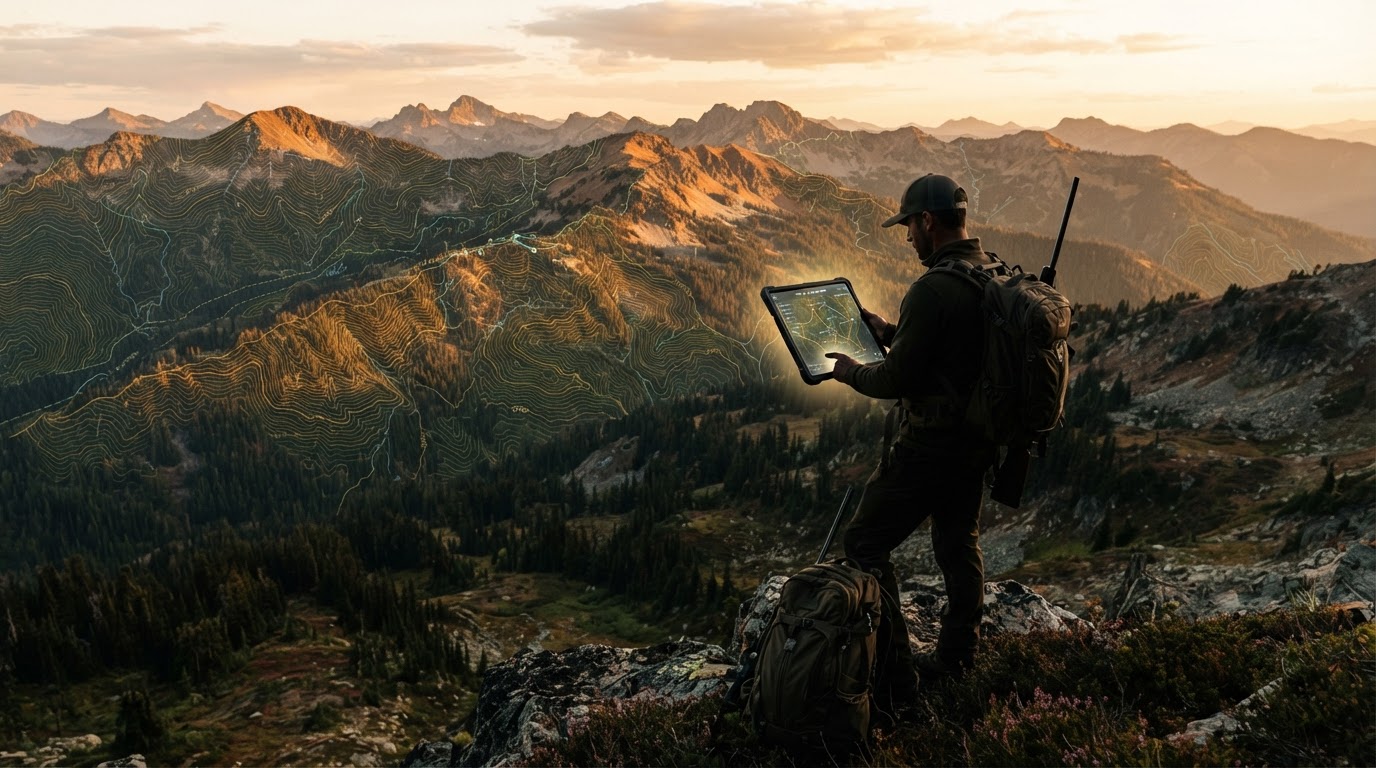
Using Digital Maps and 3D Terrain
When I research a unit, I look at things like:
- Elevation
- Roads and trails
- Water sources
- Vegetation
- Public and private land boundaries
- Potential camping locations
- Terrain difficulty
I also like switching into 3D views. It gives me a better understanding of how the terrain changes throughout an area.
Of course, a digital map can't tell you everything. Roads can close, trails can become overgrown, and conditions can change. But it's a great starting point.
8. Looking Back at My Idaho Moose Hunt
One of my favorite parts of the video was revisiting the area where I hunted moose in Idaho. I pulled up the maps and showed some of the locations we had used during that hunt.
I had saved information such as:
- Parking locations
- Trails we traveled
- Camping spots
- Gates and access points
- Waterways
- Areas where we encountered moose
One of the areas we spent time around was Mink Creek. We saw quite a few moose during that hunt, including cows, calves, and a couple of bulls.
Looking back at those saved locations was a great reminder of why I like recording information from my hunting trips. Even if I never hunt that exact area again, the information could be useful for future family trips or helping someone else prepare.
A Lesson in Terrain and Packing Out Meat
One thing I remember very clearly from that hunt was dealing with the marshy terrain. Packing out moose meat through wet, difficult ground was no joke!
My dad had found a roll-up sled-style carrier that helped us move quarters through some of the marsh. It was definitely an adventure.
And it's a perfect example of why you should research the terrain before applying for a hunt. It's not just about finding an animal. You also need to think about what happens after a successful harvest.
How are you going to recover the animal? How far will you need to travel? What equipment will you need? Those questions should be part of your planning from the very beginning.
9. My Color-Coding System for Hunting Maps
Another thing I briefly showed in the video was how I organize my digital hunting maps. I use different colors to identify specific types of information.
That way, I can open my maps and quickly understand what I'm looking at without clicking through every single waypoint.
For example, in the system I demonstrated:
Dark Purple/Blue: My Big Three species—moose, bighorn sheep, and mountain goats.
Gray: Past hunts or locations I've already visited.
I also save specific waypoints for things like parking areas, camping spots, and routes. This makes it much easier to revisit information later.
If you're just getting started with digital scouting, I'd recommend developing a simple organization system that makes sense to you. You don't need anything complicated. You just need to be consistent.
10. Don't Rely on One Research Source
As much as I enjoy using GOHUNT, I don't recommend relying on one website for everything. I also like researching through:
- Official state wildlife agency websites
- Hunting forums and online communities
- Local wildlife biologists
- Guides
- Taxidermists
- Meat processors
- Other hunters familiar with the area
Each source may offer a different perspective. For example, a mapping tool might show a road, but local information could reveal that the road is difficult to travel or seasonally closed. A wildlife agency might have updated regulations that haven't yet appeared on a third-party website.
The more reliable information you gather, the better prepared you'll be.
My Hunting Application Season Checklist
Before submitting your hunting applications, here's what I recommend reviewing.
Get Organized
- Create or update your hunting application spreadsheet
- Confirm your hunter education requirements
- Review state licensing accounts
- Record important application deadlines
- Check your preference or bonus points
Research Your Hunts
- Choose your target species
- Compare states and hunting units
- Review historical draw odds
- Look at tag allocations
- Research harvest success
- Compare season dates and legal hunting methods
Review the Hunting Area
- Check public and private land
- Research legal access
- Review terrain and elevation
- Identify possible camping locations
- Look at roads and trails
- Research historical weather
Think About Your Personal Situation
- Can you realistically take time off for the hunt?
- Are you physically prepared for the terrain?
- Can you afford the trip and application costs?
- Do you have the equipment you'll need?
- Do you have a plan for recovering and transporting harvested game?
Watch Hunt Season Episode 1: Application Season Using GOHUNT
Want to see how I actually research hunting units? In the first episode of my Hunt Season series, I walk through GOHUNT, demonstrate the filtering and draw odds tools, and revisit the area where I completed my Idaho moose hunt.
It's a behind-the-scenes look at how I begin planning hunting opportunities before application deadlines arrive.
Watch the full video on the Wicked Addiction Wilderness YouTube channel.
This video demonstrates the tools and draw information available when it was recorded. Always verify current application rules, draw systems, deadlines, and hunting regulations with the appropriate state wildlife agency.
Final Thoughts: Hunting Starts With Research
One of the biggest things I want new hunters to understand is that you don't need to know everything about every state to get started.
Start small. Learn your home state's hunting opportunities. Understand how licensing and draw systems work. Then, as you gain experience, you can start exploring out-of-state hunting opportunities.
For me, application season is one of the most exciting parts of the year. It's when I get to dream about future hunts, research new places, and start making plans for the adventures ahead.
And sometimes, just looking at maps is an adventure all by itself!
Want to Learn More About Hunting Applications and Planning?
At Wicked Addiction Wilderness, I created the Hunting Academy to help new and developing hunters understand the process of getting into the field. From hunting seasons and tag systems to mapping, scouting, and planning your next adventure, my goal is to make hunting education easier to understand.
Explore the Wicked Addiction Wilderness Hunting Academy.
Happy hunting!
Karen Vallauri
Wicked Addiction Wilderness
From the classroom to the wild.