
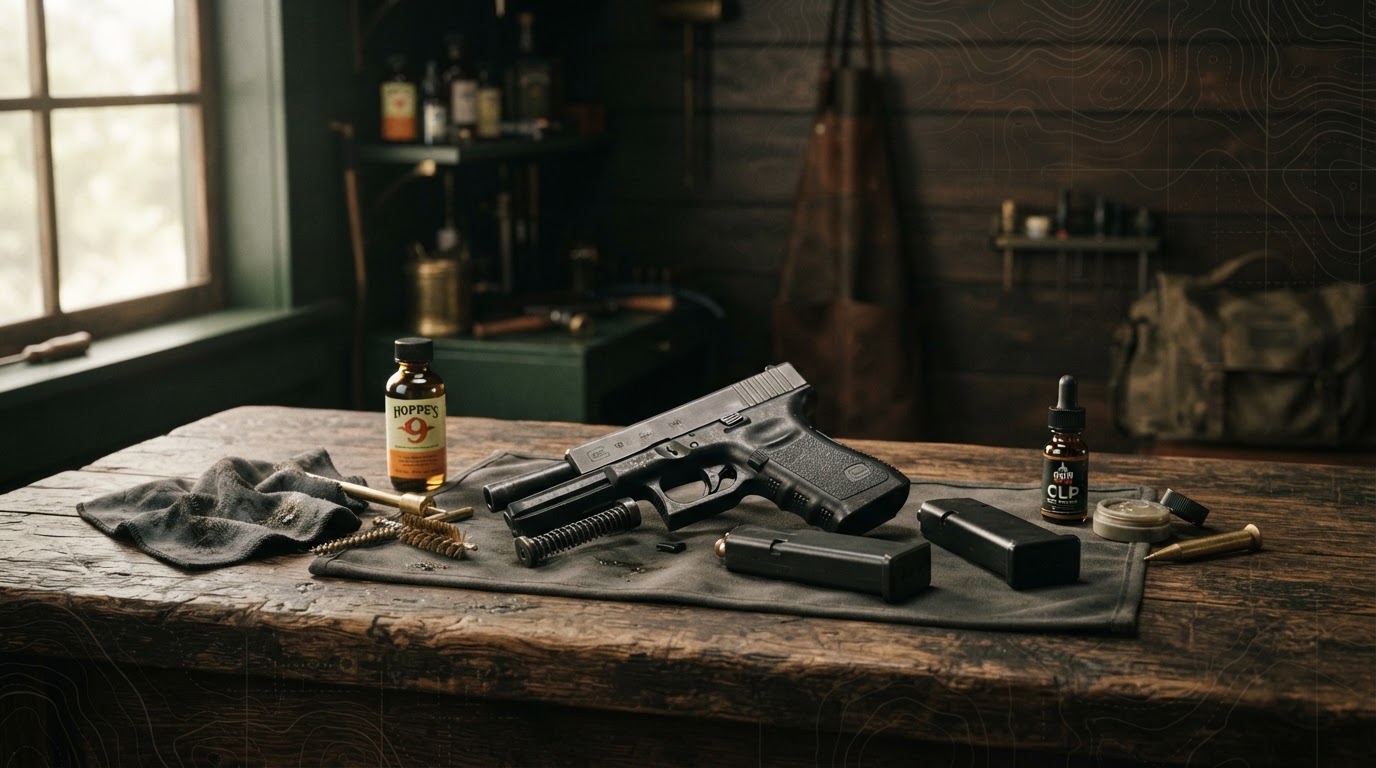
If you own a handgun, learning how to shoot it is only part of the responsibility. Knowing how to properly care for and maintain your firearm is just as important.
And sometimes, you learn that lesson firsthand!
During one of my trips to the shooting range, I started noticing that something wasn't quite right with my handgun. It wasn't functioning the way it normally should, and I was having trouble with the spent casings ejecting properly.
That was my first clue that something needed attention.
After stopping to investigate, I discovered a significant amount of powder residue inside the firearm.
So, I decided to bring you along while I cleaned it and talk about why firearm maintenance is something every gun owner should understand.
Why Is Cleaning Your Handgun Important?
Every time you fire your handgun, residue can accumulate inside the firearm.
This buildup can include:
- Carbon deposits from firing
- Powder residue
- Primer residue
- Dirt, dust, and other debris
- Old lubricant mixed with fouling
Over time, excessive buildup can contribute to reliability issues and unnecessary wear.
Regular firearm maintenance helps you inspect the condition of your handgun, identify potential problems, and keep it operating as intended.
However, it's important to remember that not every firearm malfunction is caused by a dirty gun.
Ammunition problems, damaged components, worn parts, and other mechanical issues can also cause failures.
What Happened to My Handgun at the Range?
During my range session, I noticed that my handgun wasn't cycling correctly.
Spent casings weren't ejecting the way they should, and something felt off.
When I inspected the firearm, I discovered a considerable amount of residue throughout the internal components.
I also mentioned in the video that a bullet had become stuck.
That's an important safety concern because a projectile lodged in the barrel can create a dangerous obstruction.
If you suspect a bullet is stuck in the barrel, stop shooting immediately.
Do not attempt to fire another round to clear it. Keep the firearm pointed in a safe direction, follow appropriate unloading procedures if safe to do so, and have the obstruction assessed and removed by a qualified gunsmith or other appropriately trained professional.
Never assume a firearm is safe to fire again simply because it has been cleaned.