
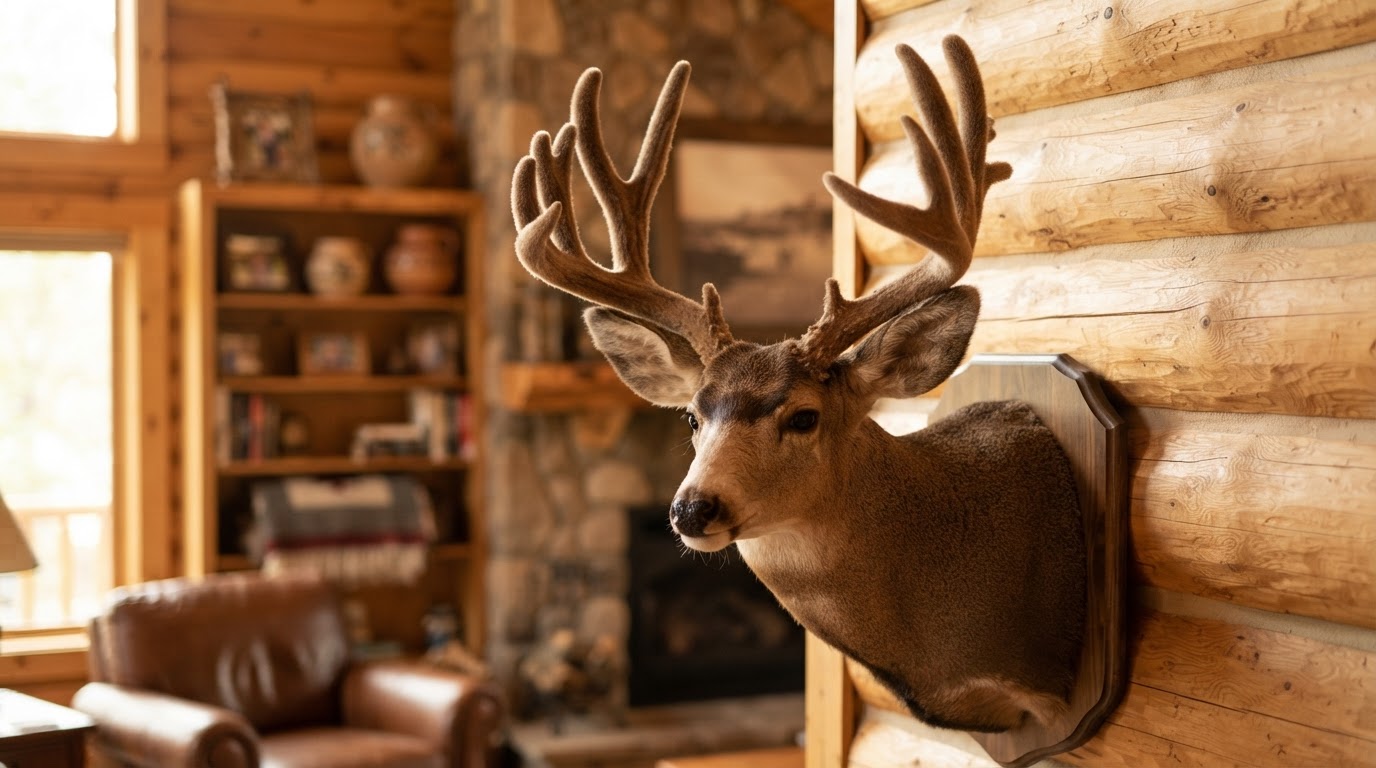
Tips for gently removing dust, debris, and small insects from velvet-covered antlers.
If you have taxidermy mounts in your home, you probably already know they need a little cleaning every now and then.
But what about velvet antlers?
Unlike regular hard antlers, velvet is extremely delicate. You can't just grab a cleaning rag and start wiping everything down!
Today, I'm sharing how I cleaned a set of velvet antlers that had collected a few tiny household bugs while sitting at my parents' house.
Nothing crazy, just some little bugs that needed to go!
And because velvet can be damaged so easily, I wanted to show you how carefully I approached cleaning this mount.
What Are Velvet Antlers?
If you've never seen velvet antlers up close, they're pretty interesting!
Velvet is the soft, fuzzy tissue that covers growing antlers on animals like deer and elk. During antler development, the velvet supplies blood and nutrients to the growing bone underneath.
Once the antlers finish developing, the velvet naturally dries and sheds.
However, when an animal is harvested while its antlers are still in velvet, the velvet may be preserved as part of the taxidermy mount.
And that's where cleaning becomes a little different.
Preserved velvet is much more delicate than a typical set of hard antlers.
Depending on how it was preserved, it can be surprisingly easy to damage or accidentally remove pieces. That's why I recommend being especially careful when cleaning these mounts.
Why Velvet Antlers Need Special Care
In my original video, I showed a velvet antler mount that had been sitting at my parents' house.
I noticed a few tiny household bugs on it.
Now, I'm not talking about a major taxidermy pest infestation. These were just little insects that I wanted to remove before they became a bigger problem.
But when it comes to velvet, even a simple cleaning job requires a gentle touch.
You don't want to pull at the fibers, scrape the surface, or accidentally expose the hard antler underneath. The goal is to remove surface debris while preserving the velvet.
What I Used to Clean My Velvet Antlers
For this particular cleaning, I used a can of compressed air with a small directional straw. It's the same general type of canned air commonly sold for cleaning computer equipment.
I chose it because I wanted to remove the small bugs without rubbing the velvet with a cloth.
However, there's an important precaution here.
Canned air can be too forceful or cold for fragile preserved velvet. Some products can also release liquid propellant if tilted or used incorrectly.
If you don't know how your velvet was preserved, I recommend asking your taxidermist before using compressed air or any other cleaning method. For routine dusting, a taxidermist may recommend a very soft brush or another low-contact method appropriate for your particular mount.
How I Cleaned the Velvet Antlers
Here's the basic process I demonstrated in my video.
Step 1: Inspect the Velvet
Before cleaning, take a close look at the antlers.
Check for:
- Dust or loose debris
- Small insects
- Areas where the velvet appears loose
- Spots where the underlying antler is showing
- Any unusual damage
If you notice active insect activity, holes, shedding fibers, or other signs of deterioration, stop and contact a taxidermist. You don't want to accidentally make the problem worse.
Step 2: Work With the Direction of the Velvet
One of the biggest things I emphasized in the video was working with the direction of the hair. I didn't want to go against the grain or disturb the surface.
Velvet has a soft, fuzzy appearance, and aggressive cleaning can change its texture or pull material away. Whatever cleaning method your taxidermist recommends, use as little contact as possible.
Step 3: Remove Loose Debris Gently
In my original demonstration, I used short, light bursts of canned air to remove the tiny bugs. I wasn't trying to blast the antlers or force anything off. I was simply giving the surface a gentle once-over.
If you use this method with your taxidermist's approval, follow the product's safety instructions and avoid getting the nozzle close to the velvet. Never allow liquid propellant to contact the mount.
For delicate or aging velvet, professional cleaning is the safer choice.
Step 4: Check for Anything Left Behind
After the first cleaning, I inspected the antlers again. I wanted to make sure I hadn't missed any of the small bugs.
In the video, I also mentioned using a fingernail or tweezers to carefully remove something that was still stuck. Looking back, I'd recommend being particularly cautious with that step.
Pulling or scraping at preserved velvet can easily remove fibers or damage the surface. If something is attached or won't come away easily, leave it alone and ask a taxidermist for advice.
Step 5: Give the Mount One Final Inspection
Once I finished, I checked everything over again. The little bugs were gone, and the mount looked much better!
But the most important thing was making sure I hadn't damaged the velvet while cleaning it. That's always the goal.
What NOT to Do When Cleaning Velvet Antlers
If you're cleaning velvet-covered antlers, here are a few things I'd avoid:
- Don't scrub the velvet. Aggressive brushing or rubbing can damage the fibers.
- Don't soak the antlers. Water and cleaning products may affect the preserved material.
- Don't use household cleaners. Chemicals can discolor or damage the velvet.
- Don't pull on loose pieces. You could accidentally remove part of the preserved surface.
- Don't use high-pressure air. Strong airflow may damage fragile areas.
- Don't ignore signs of pests. Some insects can damage taxidermy and require professional treatment.
Remember, not every velvet mount is preserved using the same process. What works on one mount may not be appropriate for another.
How Often Should You Clean Velvet Antlers?
Personally, I like checking my taxidermy mounts regularly rather than waiting until they're covered in dust.
For velvet antlers, I recommend focusing more on inspection and prevention than frequent hands-on cleaning.
Keep an eye out for dust, insects, and any changes in the velvet's condition. It's also helpful to display taxidermy away from direct sunlight, excessive moisture, and areas with major temperature fluctuations.
If your mount needs more than a little surface cleaning, contact the taxidermist who preserved it.
Watch My Original Velvet Antler Cleaning Video
Want to see the mount I was working on and how I approached cleaning it? In my original Valorie Huntress video, I demonstrate removing small household bugs from a velvet antler mount and explain why it's important to be gentle.
Watch the full video here.
Final Thoughts: Be Gentle With Your Velvet Mounts!
If there's one thing I want you to take away from this video, it's that velvet antlers need special care.
They're beautiful, but they're also delicate. A little dust or a few tiny bugs might not seem like a big deal, but you want to be careful about how you remove them.
Don't rush the process, don't scrub the velvet, and don't assume that a cleaning method used on regular antlers will work on velvet.
When in doubt, ask your taxidermist.
After all, these mounts represent memories from our hunting adventures, and we want to keep them looking great for years to come!
Explore More From Wicked Addiction Wilderness
At Wicked Addiction Wilderness, I share hunting education, outdoor skills, gear tips, and lessons learned from my own adventures. Whether you're a brand-new hunter or have been hunting for years, there's always something new to learn.
Explore more at Wicked Addiction Wilderness.
Happy hunting!
Karen Vallauri
Wicked Addiction Wilderness
From the classroom to the wild.